GTA 6 at 30fps: the TV specs that matter at 33.3 ms a frame
Grand Theft Auto VI arrives November 19, 2026 on PS5 and Xbox Series X|S, and Rob Nelson says console builds run at 30 frames per second. At 33.3 ms a frame, three specs decide the TV: Game Mode lag, contrast and HDMI.
: Adds the Best Buy prices of the LG C5, LG G5 and Samsung S95F, and how those prices moved since the summer.
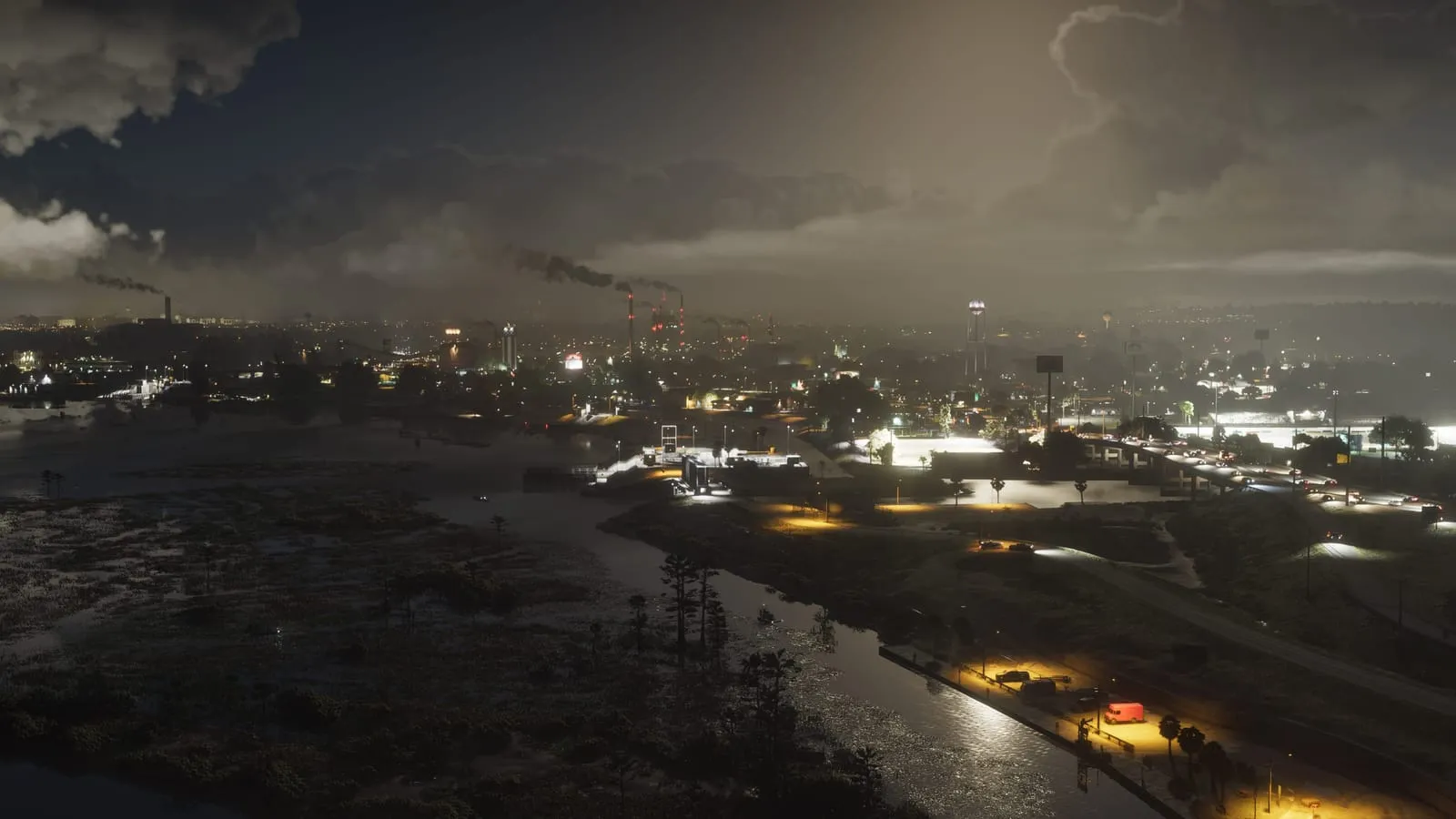
A TV bought for GTA 6 comes down to three things: how much lag Game Mode removes, what the panel does with contrast, and which HDMI socket the console ends up in. With console builds running at 30 frames per second, which Digital Foundry measured at 33.3 milliseconds per frame on August 28, 2026, the 120 Hz and VRR badges on the box will do nothing on November 19, 2026.
A TV bought for Grand Theft Auto VI comes down to three things: how much lag Game Mode removes, what the panel does with contrast, and which HDMI socket the console ends up in. Rob Nelson, co-director of Rockstar North, told creator Davy Jones that console builds run at 30 frames per second, remarks carried on August 27, 2026 by Kotaku and by Push Square. Digital Foundry put that cadence at 33.3 milliseconds per frame on August 28, 2026. The 120 Hz and VRR badges on the box will do nothing on November 19, 2026. VRR lets a screen follow whatever frame rate the console sends it.
No 40fps or 60fps mode has been announced, and Rockstar Games has published no statement of its own about frame rate. Where the number came from is in our piece on the 30fps remark.
| Earns its money | Does nothing here |
|---|---|
| Game Mode, 1 to 5 ms of input lag instead of 80 to 120 | VRR, whose PS5 window starts at 48 Hz |
| Panel contrast, judge of an image Digital Foundry calls soft | The LG G6’s 165 Hz, with no console use |
| A full bandwidth HDMI input | 4K at 120 Hz, never announced by Rockstar |
VRR has nothing to smooth at 30 frames per second
The PS5’s VRR window runs from 48 to 120 Hz, per KTC on May 1, 2026, a monitor maker and an interested party. Thirty frames per second sits below that floor. Low Framerate Compensation catches up by repeating frames, but needs a natively 120 Hz panel. KTC put it plainly on June 8, 2026: VRR is valuable for unstable 60 or 120fps modes, not a guaranteed fix for a 30fps one.
One reason survives for 120 Hz. A 40fps mode, 25 ms a frame, divides exactly into a 120 Hz cadence, and on June 29, 2026 Digital Foundry called a 30 or 40fps mode likelier than 60fps on PS5 Pro. On 60fps itself, the same piece is blunt:
That makes a 60fps version extremely unlikely on console hardware: there’s no way to regain enough GPU and particularly CPU time to make a 16.7ms update rate work without compromising the world.
No 40fps mode has been announced either. The 165 Hz on the LG G6 box is worse: Les Numériques, testing it on April 9, 2026, found it usable only on PC with DSC compression, console output capped at 120 Hz.
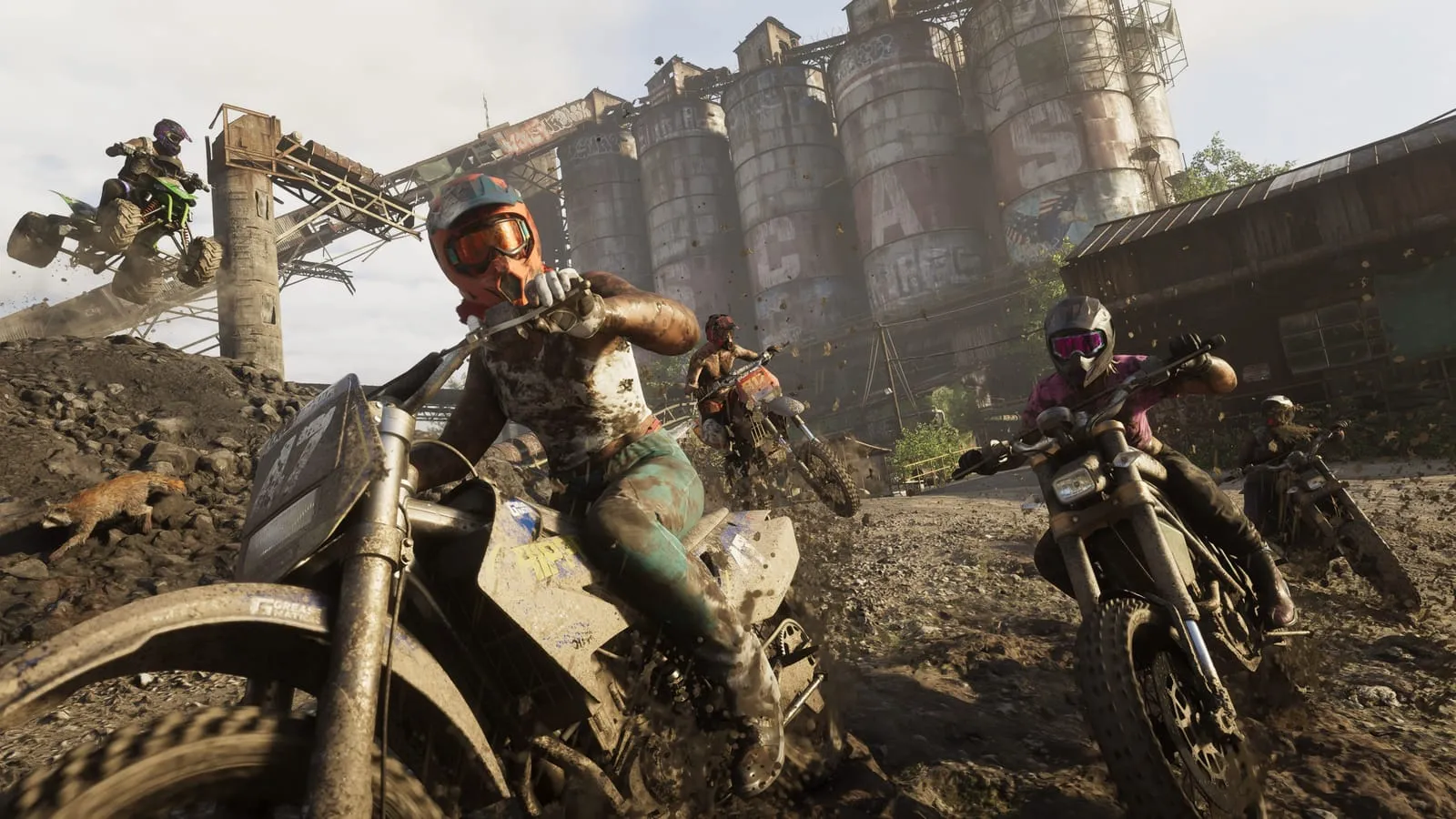
Game Mode, the one thing to do on setup night
In its factory picture preset, a television sits between 80 and 120 ms from pad to screen, against 1 to 5 ms once Game Mode is on, per LeBonEcran’s 2026 guide. Les Numériques, which measures in a lab, recorded 9.3 ms on the LG 65G6 in 1080p at 60 Hz and 4.8 ms in 1080p at 120 Hz. The PlayStation product page lists the game as “1 player” with “Offline play enabled” anyway: no human opponent to owe milliseconds to.
The HDMI port that quietly cancels the purchase
HDMI 2.1 carries 48 Gbps, HDMI 2.0 only 18, and that bandwidth is what gates 4K at 120 Hz and VRR. Plenty of sets open it on one or two inputs only, and default those inputs to a “Standard” signal format that blocks the lot until it is changed in the menu. Frandroid documented the trap on June 19, 2026: LG and Samsung give full bandwidth on all four inputs, Sony only on certain ranges. On LG sets VRR is live on HDMI 1 and 2 alone, and an HDMI 2.0 cord in a 2.1 port stays capped at 18 Gbps.
What the panel is actually being asked to display
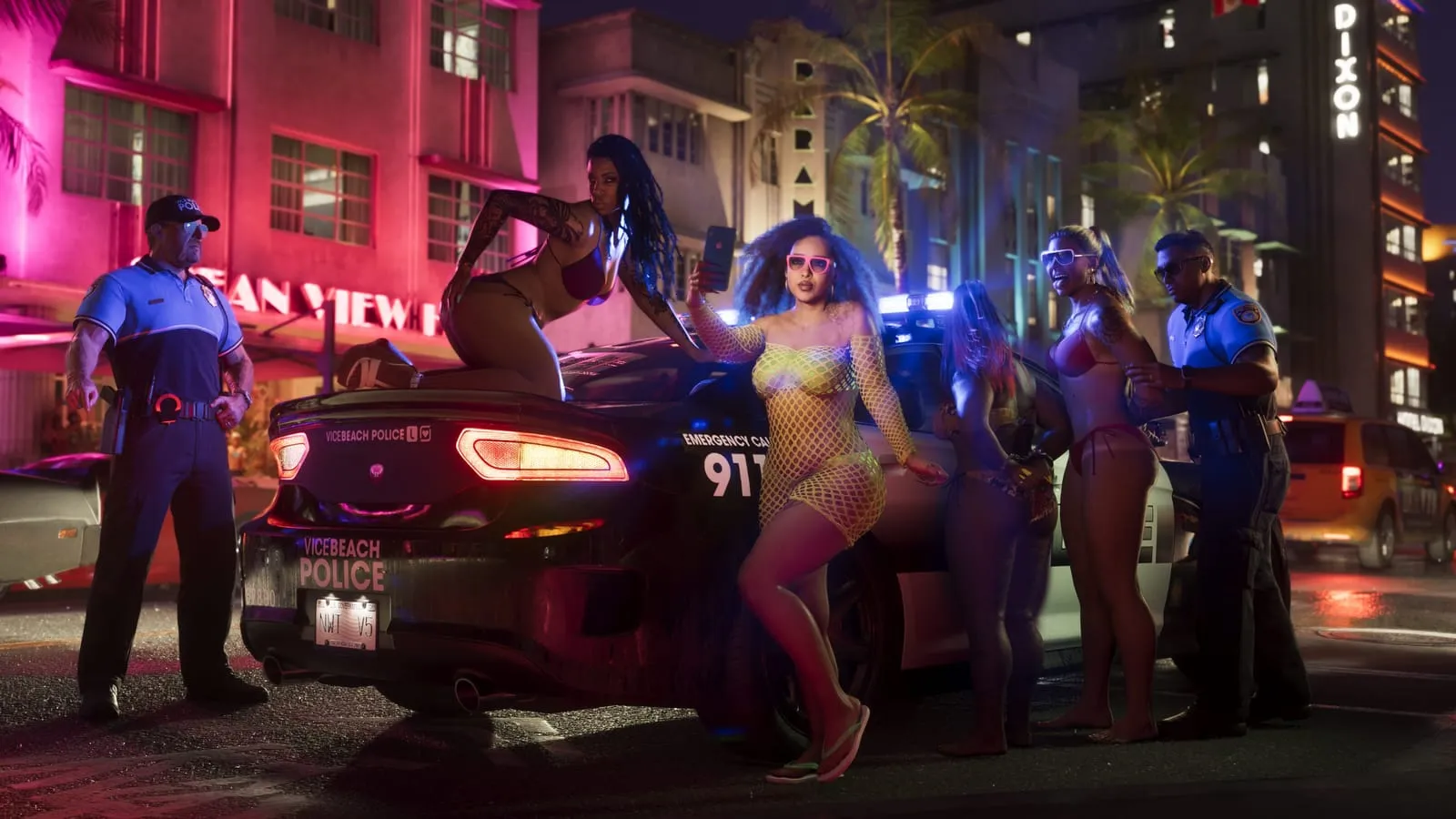
Digital Foundry’s August 28, 2026 read describes a soft image with geometric aliasing and shimmer on fine detail, rendered at roughly 1440p internally on a base PS5 with no dynamic resolution, pushed to 4K by a plain spatial upscale. A television does not repair that, and the RAGE engine judder flagged in the same analysis, visible even when the frame rate holds steady, survives any motion processing. What falls to the panel is contrast and HDR on the scenes Rockstar chose to show: the neon nights of Vice City, the smokestacks of Ambrosia.
Rockstar has never published the game’s output resolution, on any of the four machines, or said whether it supports VRR or 120 Hz output. On October 6, 2026, 44 days from November 19, a screen for this game is bought on the strength of one public sequence, captured on a base PlayStation 5.
What these OLED sets cost at Best Buy
| Set | Best Buy, September 13, 2026 |
|---|---|
| LG OLED C5, 55 inch | $1,299.99, listed by LG |
| LG OLED C5, 65 inch | $1,367 |
| LG OLED G5, 65 inch | $2,199.99 |
| Samsung S95F, 65 inch | $2,319, free shipping |
Prices crept up between checks. The 65-inch C5 sat at $1,299 on the previous one, the S95F at $2,197 on August 26, 2026, and the G5 at $1,999.99 in June. At $1,299.99, the 55-inch C5 is the cheapest set in the table, with four HDMI 2.1 inputs.
Keep reading
 GuidesGTA 6 on Xbox Series S: out November 19 on the $499.99 console
 DealsGTA 6 console monitor guide: five picks from $99.88 to $799.99
 DealsGTA 6 controllers: six pads worth buying, from $48.99 to $199
- DealsGTA 6 headsets: six picks for PS5 and Xbox, $57.99 to $199.99
- NewsGTA 6 lifted UK PS5 and Xbox sales, Nielsen IQ says
Read next
29 AugGuide
GTA 6 setup: three tiers, from $579.98 to $1,759.97
Console builds of GTA 6 run at 30 frames per second, according to Rockstar North co-director Rob Nelson. That single line deletes half of the usual shopping list and puts the November 19, 2026 floor at $579.98, on an Xbox Series S.
3 OctFAQ
GTA 6 on PS Portal: Remote Play is listed on the PS5 store page
GTA 6 launches November 19, 2026 on PS5 and Xbox Series X|S. Its PlayStation Store listing reads 'Remote Play supported,' so the copy installed on a PS5 can be played on a PlayStation Portal, a phone or a PC.
19 SeptGuide
GTA 6 loading times: Sony promises near-instant loads on PS5
Sony's product page for Grand Theft Auto VI promises near-instant load times from the PS5 SSD. The closest measured figures come from GTA 5 on PS5 in March 2022, where three outlets clocked 11, 27 and 39 seconds.
16 SeptGuide
GTA 6 HDR settings on PS5 and Xbox: the exact menu paths
Grand Theft Auto VI reaches PS5 and Xbox Series X|S on November 19, 2026, at a cadence Digital Foundry clocked at 33.3 ms a frame. Sony documents two HDR options on PS5, Microsoft a five-level path to its calibration tool on Xbox.